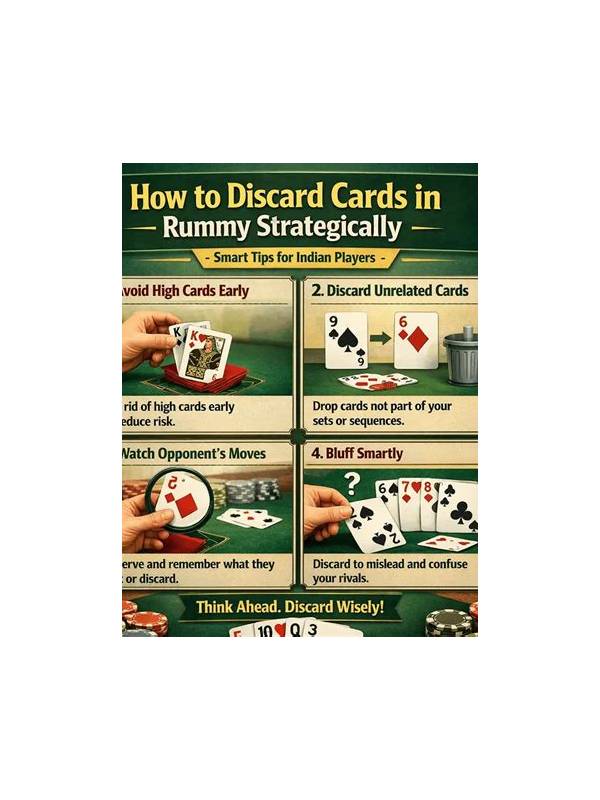
Rummy Guide: Practice Recognizing Dead Cards

A dead card is not simply a card you dislike. It is a card whose realistic routes have disappeared or become too expensive. Learning to recognize dead cards can make your discards calmer because you are acting on structure instead of emotion.
For practice, take a completed or imaginary hand and label every card with its current possible jobs. A card may belong to a sequence, a set, a bridge, or no useful group. Then remove one supporting card and repeat the labels. Notice how quickly a previously promising card can lose its role when the surrounding structure changes.
Use three questions. Can this card join a valid group with one reasonable draw? If not, can it support a fallback group without damaging a required structure? If neither answer is yes, mark it as dead for the current plan. The word “reasonable” matters: a route that needs several exact cards should not be treated like a one-card completion.
Practice with random positions rather than only attractive hands. Write down a small set of cards, shuffle their order, and give yourself a short time to identify the strongest group and the weakest orphan. The objective is not speed for its own sake. It is to build the habit of evaluating the whole arrangement before choosing a discard.
Include visible information when available. A needed card that has already appeared in the discard pile may make a route less realistic, while an unseen card remains uncertain. Do not call a route impossible unless the rules or known cards make it impossible. Good practice distinguishes “unlikely,” “expensive,” and “dead.”
After each exercise, ask what evidence changed your assessment. Was it a broken connector, a competing required sequence, or a high holding cost? Naming the cause is more useful than simply checking whether the chosen discard was right.
With repetition, dead-card recognition becomes a quiet review step. You will still face uncertainty, but you will be less likely to preserve a card only because it once looked promising. That is the practical benefit of the drill. n+You can make the exercise more realistic by imposing a discard deadline and hiding some cards from yourself until the review. Compare your first assessment with the assessment after the hidden information is revealed. The point is to learn which assumptions came from structure and which came from hope. n+A useful review question is, “What would make this card alive again?” If the answer is a single ordinary draw, it may be conditional. If the answer requires several exact events, it is probably dead for the present plan. This distinction keeps practice grounded in realistic recovery paths.
Related Post

Rummy FAQ: When Is a Low-Risk Discard Still Wrong?
A discard can look safe to opponents while still being the wrong choice for your [...]
Rummy Practice: Score Decisions Before Seeing Outcomes
Practice evaluating the quality of a rummy choice independently from the card that appears afterward. [...]