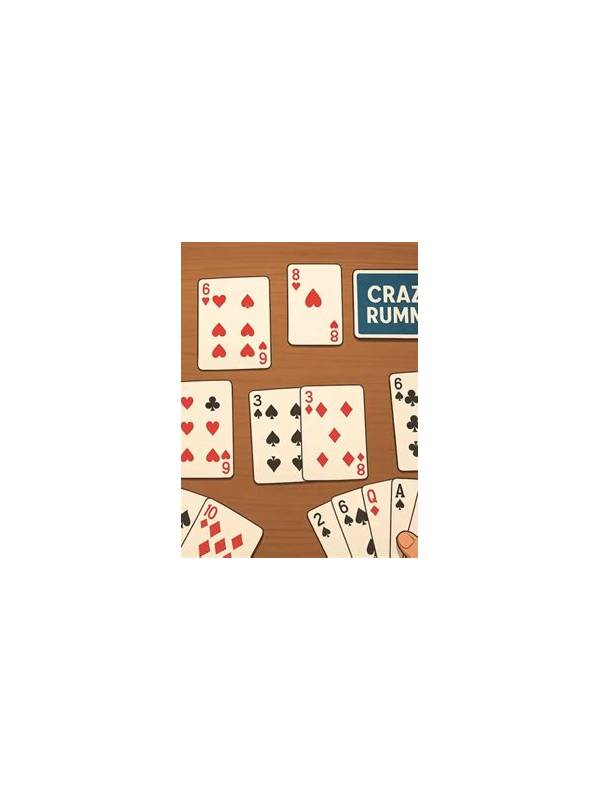
Rummy How-To: Build a Personal Decision Vocabulary
Players often review a rummy hand with vague phrases such as “that card felt wrong.” A personal decision vocabulary turns those feelings into useful observations. You need only a handful of terms, used consistently.
Begin with structure words: sequence, set, connector, and isolated card. Define them in the way your table uses them. Then add decision words such as protect, test, release, and reassess. “Protect” means a group is strong enough to avoid breaking casually. “Test” means you keep a possibility for a limited number of turns while looking for evidence. “Release” means you discard a card because its alternatives are no longer attractive.
Add one risk word: exposure. A discard has exposure when it reveals information or may help another player. Exposure does not mean a card must never be discarded. It means you include that consequence in the comparison. Another useful term is deadline: the point at which a narrow plan must be abandoned if it has not improved.
Use the vocabulary in short notes after a round. Instead of writing “bad draw,” record “tested a one-card gap for two turns, then missed the deadline.” Instead of “I should have kept the queen,” write “released a high liability before confirming whether the pair had support.” Precise language makes the lesson transferable to the next hand.
The vocabulary should simplify thought, not create jargon. If a term takes longer to explain than the decision itself, remove it. Keep perhaps ten words on a note beside your practice area. After several rounds, keep the terms that help you spot repeated mistakes and replace the rest.
This method is especially helpful when discussing hands with friends. Shared definitions reduce arguments about hindsight. You can disagree about whether a plan was worth testing while still agreeing on what happened. The result is a calmer review and a clearer record of your decision process.
Keep the vocabulary neutral. Words such as “bad,” “stupid,” or “lucky” describe emotion more than process. Replace them with terms that explain an action and its evidence. Over time, those neutral descriptions make it easier to notice which decisions are repeatable and which were merely shaped by an unusual draw. You can also use the terms to set a review limit. Label the round’s turning point, name the action, and stop after identifying one change for next time. A vocabulary is successful when it makes reflection shorter and clearer, not when it produces a long technical commentary after every deal.
Related Post
Rummy Safety: Check a Download Source Before Opening an APK
A source check can reduce avoidable security risks when an Android rummy app is offered [...]
Rummy Comparison: Flexible Cards Versus Completed Groups
Understand the different jobs of flexible cards and completed groups when planning a hand. [...]