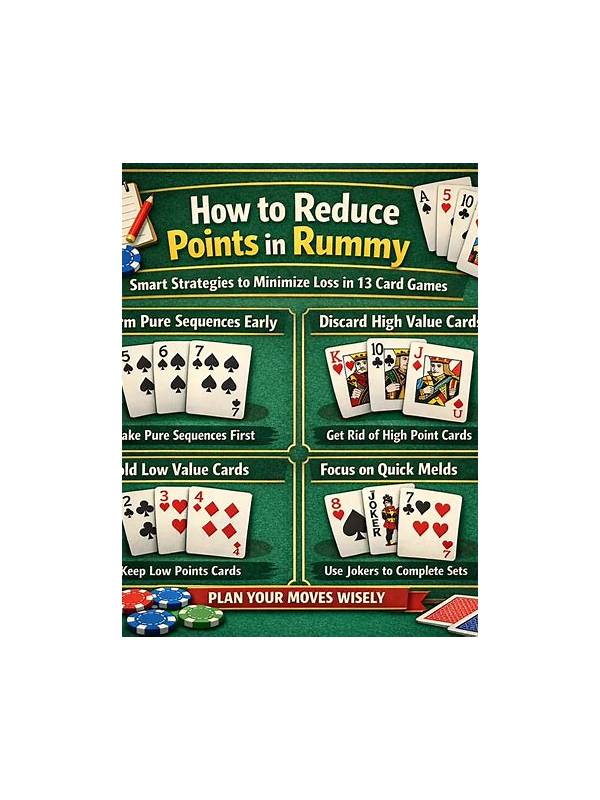
Rummy How-To: Run a Five-Second Pre-Discard Scan

Fast tables reward a compact routine. A five-second pre-discard scan will not solve every difficult hand, but it can catch the most common errors: throwing away a flexible card, breaking a confirmed group, or releasing a card that obviously helps another player.
Use the same order every time. First ask, “Is this card already part of a confirmed legal group?” If yes, stop and choose another candidate unless the rules or a clear plan require breaking it. Second ask, “Does this card have two realistic uses?” Middle cards, jokers, and connectors often deserve a closer look because their value is easy to underestimate.
Third, check the card’s cost. If your hand ended now, would retaining this card create a large penalty or leave an unresolved group? High-cost isolated cards are common discard candidates, but only after the first two checks. Fourth, glance at the visible table state. Has another player taken a related card, or have several relevant cards appeared in the discard pile?
Finally, say the reason silently in a few words: “isolated high card,” “narrow route,” or “protecting sequence.” If you cannot explain the discard, pause for one more look. A reason does not need to be perfect; it needs to be clearer than impulse.
The scan should be brief, not a demand for certainty. If the table is timed, use it as a prioritization tool. Confirmed groups come first, flexible cards second, cost third, and table clues fourth. When two cards remain close, prefer the one that leaves more room for the next draw.
Practice the scan outside live play with sample hands. Set a timer, name the discard, and then review whether the explanation matched the hand. Over time, the order becomes automatic and frees attention for more complex decisions.
If the scan repeatedly takes longer than five seconds, identify the step causing the delay. You may be holding too many ungrouped candidates, or you may be trying to predict an opponent with no evidence. Simplify the hand layout and limit the table check to visible, relevant clues. The routine should create clarity, not another source of pressure.
Five seconds is enough to add structure to a rushed moment. A consistent scan turns a discard from a reflex into a small, repeatable decision with visible reasons.
Do not use the scan to delay a required action indefinitely. Its purpose is to catch obvious errors and select among reasonable candidates. Once the checks are complete, act on the clearest explanation and continue observing the hand. Speed and care can coexist when the order is familiar.
Related Post
Rummy Safety: Recognize When Advice Is Really a Promise
Learn to distinguish educational rummy guidance from claims that imply guaranteed winnings or outcomes. [...]
Rummy Practice: Build Hands With Deliberate Dead Ends
Training with intentionally awkward hands teaches players how to reset instead of forcing a failing [...]