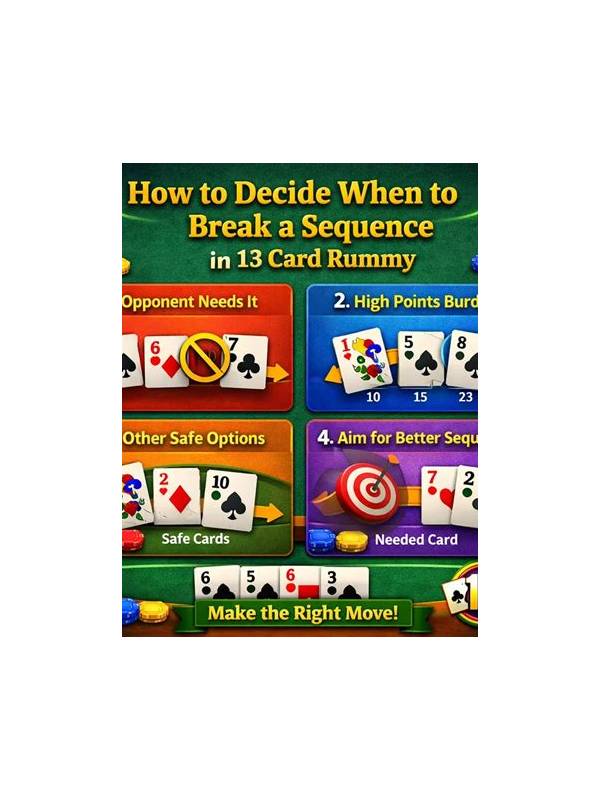
Rummy How-To: Make a Late-Hand Option List
Late in a rummy hand, a large strategy discussion is often less useful than a short option list. Fewer turns remain, so the list should focus on actions that can be completed or reviewed soon. The aim is to reduce avoidable errors, not to create the illusion of certainty.
Begin with legality. Identify which groups are already valid and which require a specific card or arrangement. Mark any declaration or table condition that could invalidate an otherwise attractive finish. A legal but modest route is often more valuable than a clever route that still depends on an unverified requirement.
Next, list the cards that must be retained for each realistic finish. If two finishes require the same card, note the conflict instead of counting them as two independent options. Remove any option that depends on several unknown events unless the remaining rules or position give it unusual support.
Add an exposure note. Which discard could help an opponent, and how costly would that be? Do not let imagined danger eliminate every action. Use visible evidence, hand size, turn order, and the penalty structure to rank exposure. The list should make risk explicit without turning it into a guess about another player’s hidden hand.
Finally, choose a review trigger: the next draw, a particular discard, or the last permitted turn. At that trigger, compare the options again and remove those that no longer fit. Late-hand clarity comes from narrowing deliberately. A short list of legal, timely, and evidence-supported choices is more useful than carrying every earlier possibility to the finish. Keep the final list visible in words rather than relying on a vague feeling. For example, note “finish the confirmed group,” “hold the connector for one draw,” or “release the exposed high card if no legal route appears.” Specific actions make the next review faster and reduce the chance that excitement or frustration will silently change the objective. Once the hand ends, compare the list with what you actually did and record one correction for future late positions. Write the final options in action language, such as “hold for one draw” or “release if no legal route appears.” Specific wording makes late reviews faster and reduces emotional drift. Review the list after the hand.
Related Post
Rummy Guide: Use a Loose-Card Queue to Simplify Discards
A ranked loose-card queue turns a crowded hand into a manageable set of discard candidates. [...]
Rummy Strategy: Protect a Requirement Before Chasing a Bonus
A required combination should usually guide the hand before an attractive optional improvement. [...]