Rummy How-To: Test a Sequence Idea Before Committing
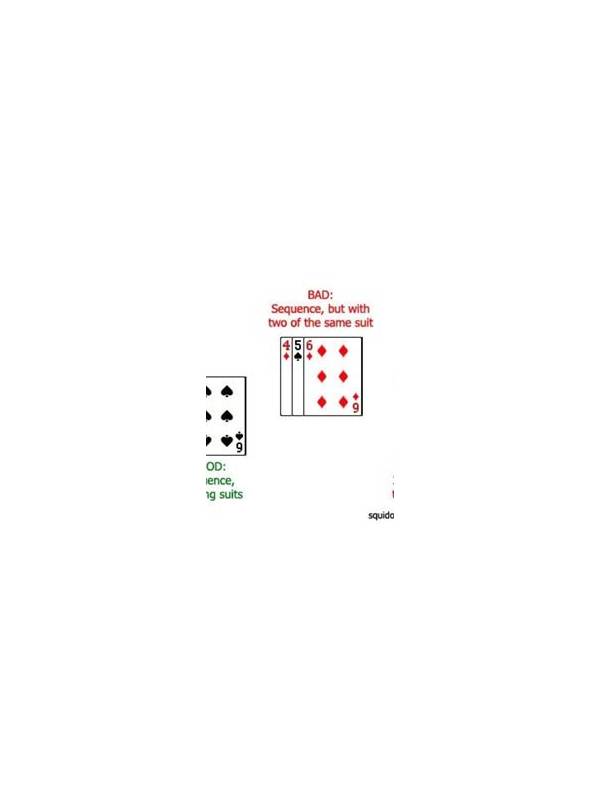
An attractive pair can make a hand feel more organised than it really is. Two connected cards suggest a sequence, but the missing card may be difficult to obtain or may compete with a better use for the same space. Before committing several turns to one idea, run a quick test.
First, identify the exact cards that would complete the route. A five and six of one suit may need a four or seven. A pair of matching ranks may need another copy for a set. Write the needed cards mentally, then check whether any are already visible in your hand or the discard pile. This does not give a perfect count, but it reveals whether the route has one practical entry or several.
Second, compare the route with the rest of your hand. A sequence idea is stronger when it connects to another card you already hold. For example, a five-six combination alongside a seven in another arrangement may create a useful bridge, while an isolated five-six surrounded by unrelated high cards may be less valuable. Consider whether keeping the pair forces you to carry cards that create large points or reduce your next choices.
Third, set a review point. You might allow one or two draws for a narrow route, depending on the format and current risk. If the needed card does not appear, reassess instead of protecting the original idea automatically. A deadline is not a prediction that the card will arrive. It is a reminder that every turn has an opportunity cost.
When testing a route, avoid revealing too much through predictable discards. If a card can serve two plans, keep the option that protects your hand while you gather information. But do not confuse flexibility with indefinite holding. A card that fits many imaginary combinations can still be a poor card if none of those combinations has a realistic completion path.
At the end of the hand, review the test rather than only the outcome. Did you identify the missing cards? Did you compare alternatives? Did your review point arrive soon enough? These questions build a repeatable process. The best sequence idea is not always the one that looks most elegant; it is the one that can be completed with manageable risk and clear next steps.
If two routes remain close, prefer the one that leaves a simpler discard on the next turn. Simplicity reduces rushed choices and makes the review point easier to remember. A modest, well-understood improvement is often better than a complicated plan with many conditional branches.
Related Post
Rummy Discard Pile Reading Without Overconfidence
Reading visible discards is useful when treated as evidence rather than a certain prediction of [...]
Rummy FAQ: Can a High Card Ever Be Worth Holding?
A high card can be useful when it supports a credible structure, but its point [...]