Rummy Strategy: Preserve a Backup Plan in the Middle Game
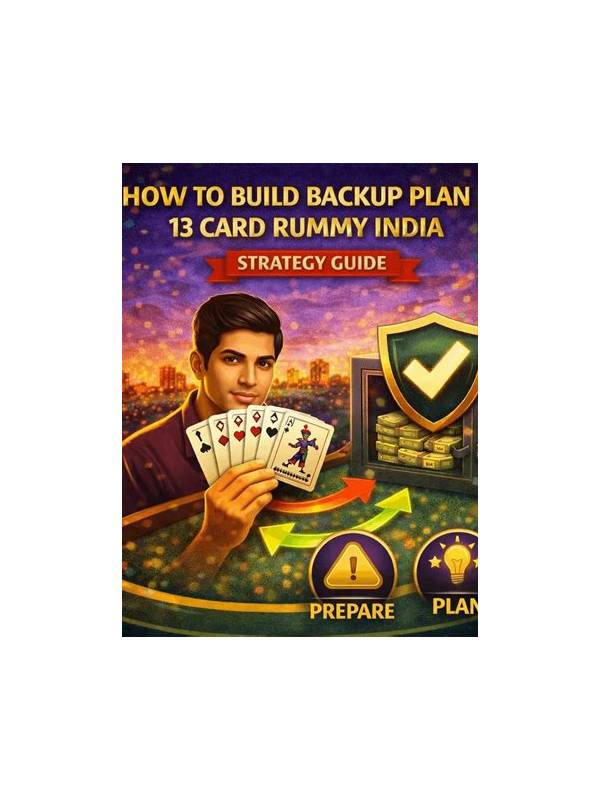
The middle of a rummy hand is where a promising opening idea can become expensive. You have invested several turns in a sequence or set, but the needed cards have not arrived. Preserving a backup plan keeps one disappointing draw from forcing a rushed discard.
Identify the primary route and the reserve route separately. The primary route is the arrangement you currently prefer. The reserve route uses cards that are not fully committed and could become useful if the primary route fails. Do not call every possible connection a backup. A real reserve route should have at least one reasonable improvement and should not require you to break a firm requirement immediately.
Protect flexibility deliberately. When choosing between two similar discards, consider which one removes more future options. A card that joins two broad routes may be more valuable than a card that belongs to one narrow route, even if the narrow route looks closer to completion. On the other hand, do not preserve flexibility forever. A hand filled with options but lacking confirmed groups may need a firm commitment.
Set a checkpoint based on turns or information. After two unhelpful draws, review the primary route. Ask whether its expected improvement is still wider than the reserve route. If not, promote the backup and release the card with the highest cost. The checkpoint prevents a sunk-cost feeling from deciding for you.
Keep the backup small. One secondary sequence or one alternative set is usually enough. Tracking five imagined futures creates noise and makes the discard pile harder to read. Use short labels such as “main,” “reserve,” and “outsider,” then update them when the hand changes.
The objective is not to avoid commitment. It is to commit with an exit. A backup plan gives you a controlled response to an unhelpful draw, while a clear checkpoint tells you when to switch. That combination reduces panic and helps you build the final hand from current evidence rather than from loyalty to an earlier idea.
Do not confuse a backup with insurance against every outcome. If the reserve route requires several exact cards, it may only be another form of wishful thinking. Test it with the same questions as the primary route: what is missing, how many plausible improvements exist, and what group would be damaged if you switched?
In a review, distinguish what you knew from what you learned later. Public cards, table messages, and the rules page are evidence only when they were visible before the choice. This habit keeps practice fair and makes the lesson transferable. A compact note about the decision, the available alternatives, and the next checkpoint is enough to guide the next session without turning a single hand into a fixed rule.
Related Post
Rummy Tips: Use a Two-Pass Sort on Every New Hand
A two-pass sorting routine separates quick structure from deeper analysis when a new rummy hand [...]
Rummy Comparison: Open Information Versus Private Information
Comparing visible and hidden information helps players decide what can be acted on with confidence. [...]