Rummy Strategy: Use Negative Space in a Crowded Hand

Players naturally focus on promising pairs and partial sequences. In a crowded hand, it is equally useful to study negative space: the combinations that the current cards cannot realistically support. This does not mean giving up on every incomplete group. It means noticing when a plan lacks room, links, or time.
Start by marking the groups you can describe clearly. Then look at the unassigned cards. For each one, ask whether it has a practical partner, a legal set possibility, or a role in protecting a required sequence. If the answer is no, the card is a strong discard candidate. If the answer depends on several exact draws, label it speculative rather than promising.
Negative space also appears between groups. Two attractive pairs may compete for the same card, or a planned sequence may require a card already needed elsewhere. When plans share a scarce resource, they are not independent options. Write the overlap down. A hand with three apparent plans may really have one plan and two variations that cannot coexist.
Use turn position as a reality check. Early in the hand, a speculative card may deserve a short trial because many draws remain. Later, an unsupported card consumes attention and increases the chance of an expensive leftover. A deadline for weak plans keeps negative space from being ignored until the endgame.
This approach is not pessimism. It protects the cards that do have meaningful work. When you remove a low-support card, the remaining hand often becomes easier to sort and compare. Fewer candidate plans can produce a clearer decision, especially when a timer or distraction is present.
After the hand, review one discarded card and one retained card. For each, list the support that actually existed at the moment of choice. If a retained card never gained a realistic route, ask why its appearance was persuasive. If a discarded card later became useful, determine whether that use was visible or merely lucky.
Negative space is a quiet planning tool. It turns “this hand feels messy” into a specific observation: no partner, conflicting resource, insufficient time, or unsupported hope. Once the missing support is visible, the next discard becomes easier to explain and easier to review. You can practise negative space with a small set of random cards. Give yourself a fixed number of seconds to name the unsupported cards, then explain one exception that you would retain. The exception matters: it teaches you to distinguish a low-support card from a temporary card whose role is strategically important.
Related Post
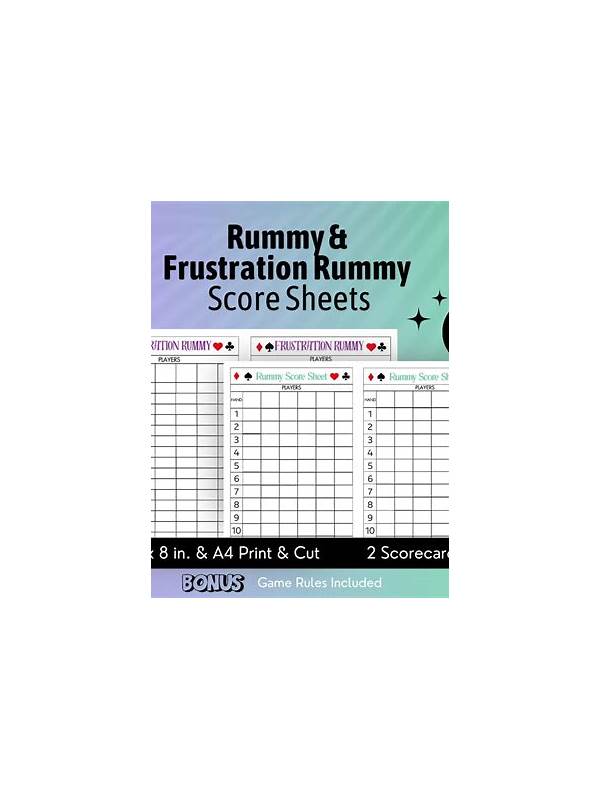
How to Keep a Rummy Score Sheet That Helps You Learn
How to Keep a Rummy Score Sheet That Helps You Learn offers practical guidance for [...]
Rummy Comparison: A Pair Search Versus a Sequence Search
Comparing pair-building and sequence-building shows when each route offers a clearer completion path. [...]