Rummy Tips: Judge a Discard by Its Replacement Value
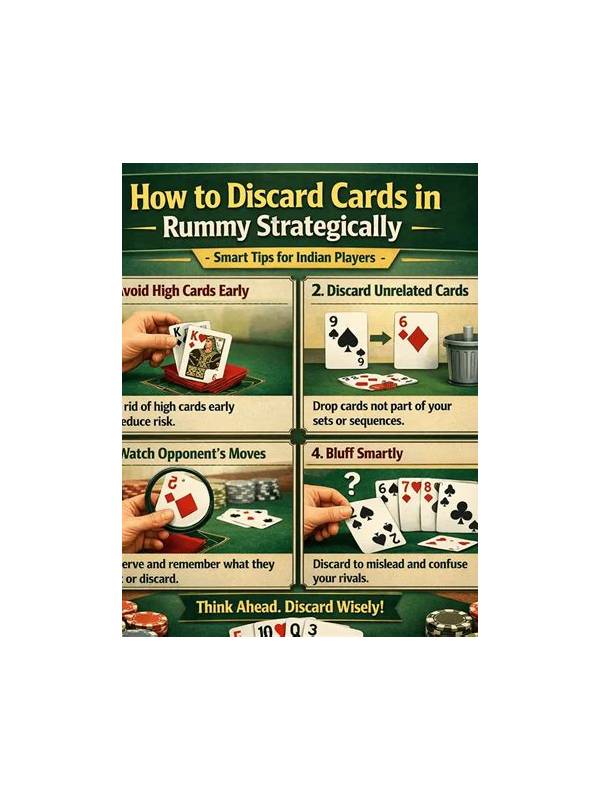
A discard is not only a card you no longer want. It also changes the shape of the hand you will manage after the next draw. Judging replacement value means asking what space the discard creates and whether that space can accept several useful cards. This perspective is especially helpful when two cards appear equally awkward.
Begin with the card’s current job. Some cards belong to a nearly complete meld, some protect a flexible pair, and some merely occupy space. A card with no credible job is a natural candidate, but do not stop there. Ask what its removal allows you to keep together. Discarding a disconnected high card may preserve a compact group; discarding a low card from a promising sequence may leave the hand visually tidy but strategically narrow.
Now list the replacement cards that would improve the hand after the discard. A broad replacement zone is valuable because it gives you more ways to progress. A narrow zone can still be correct when it completes an important meld, but it deserves a higher burden of proof. Compare not only the number of helpful cards but also the consequences of missing them. If a miss leaves several safe discards, the plan is resilient. If a miss forces you to break a second group, the apparent replacement value is overstated.
Timing matters. Early in a hand, replacement value may favor a flexible card because there is time to develop several routes. Later, the best discard may be the one that immediately lowers risk, even if it has fewer future replacements. A card that is useful in theory can be a poor choice when it blocks a declaration check or carries a large penalty under the local scoring rules.
Use a short comparison whenever you hesitate: current job, replacement zone, miss consequence, and safe exit. You do not need exact odds. Descriptions such as broad, medium, or narrow are enough to expose your reasoning. If both candidates have similar replacement value, prefer the discard that reveals less information about your intended route or reduces the opponent’s likely options, where the rules make that relevant.
The habit works because it connects today’s discard with tomorrow’s hand. It prevents the common mistake of celebrating a clean-looking hand that has no workable next step. Review your choices by asking whether the card you removed opened useful space. That question is often more instructive than asking whether the discarded card would eventually have completed something.
Related Post
Rummy Strategy: Use Suit Distribution to Break Ties
Learn how the balance of suits can help you choose between two otherwise similar rummy [...]
Rummy Tips: Use Opponent Actions as Context, Not Proof
Learn how to observe table behavior without turning one opponent action into a false certainty. [...]