Rummy Hand Branching: Compare Plans by Useful Draws
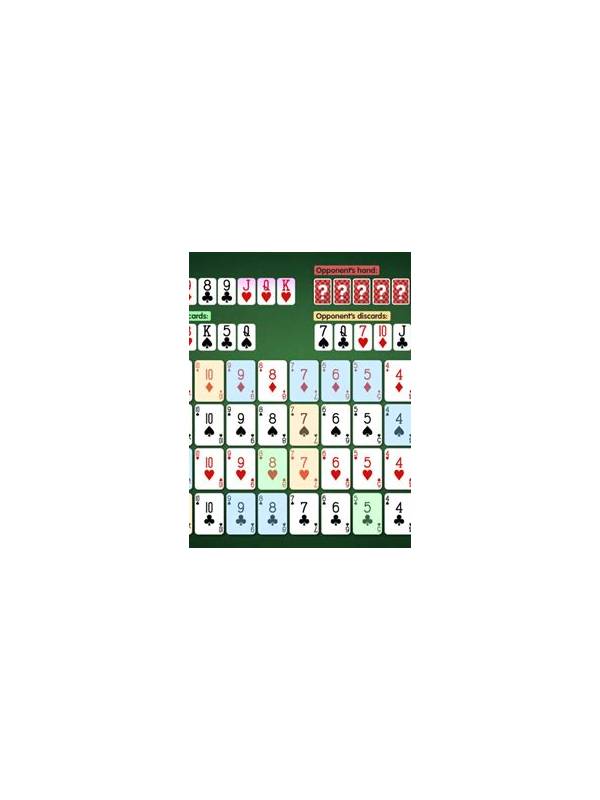
A rummy hand can look promising because one group is almost complete, yet that group may depend on a single card. Another plan may look less exciting but accept several different draws. Hand branching is a simple way to see that difference. Instead of asking only, “What can I finish now?” ask, “How many useful cards can improve this plan on the next few turns?”
Start by sorting the hand into confirmed groups, possible groups, and loose cards. A confirmed group already follows the rules of the variant. A possible group has a clear route, such as two connected cards that need one neighbor. Loose cards have no immediate partner. This inventory prevents one attractive pair from receiving all your attention.
For each possible plan, write its helpful draws. If 7 and 8 of the same suit are being held, a 6 or 9 may help. If two cards share a rank, another card of that rank may complete a set. Do not count every theoretical card equally. A draw that completes a valid group is stronger than one that merely creates another uncertain pair.
Now consider overlap. A card may help two plans at once, which makes it valuable, but it can also create confusion if you keep changing direction. Mark the strongest shared cards as bridges. A plan with several independent routes is usually more resilient than one with a single narrow route, even when both are the same distance from completion.
Branching is not a promise of success. The needed cards may already be visible in discards, or another player may take them first. Use the discard pile as evidence, not certainty. Also account for points: a narrow plan involving expensive loose cards may deserve an earlier exit.
Before drawing, compare two or three routes and choose a temporary leader. Give it one or two turns, then reassess. If its useful draws are disappearing or the hand is becoming more expensive, pivot. This method keeps decisions flexible without treating every possibility as equally important.
The goal is not to calculate a perfect probability. It is to notice whether a plan has room to breathe. Counting useful branches turns a vague feeling of “potential” into a practical question you can answer before the next discard. Keep the count approximate and repeatable. Two strong outs and four weak possibilities should not be reported as six equal chances. A simple distinction between strong, conditional, and unavailable draws gives you a more honest plan and makes post-game review much easier.
Related Post
Rummy How-To: Build a Simple End-of-Round Note
A compact end-of-round note preserves useful lessons without turning every game into a long analysis. [...]
Rummy Comparison: One-Card Progress Versus Whole-Hand Stability
Comparing immediate progress with whole-hand stability helps explain why a promising draw is not always [...]