Rummy Tips: Use the Discard Pile as Evidence, Not a Promise
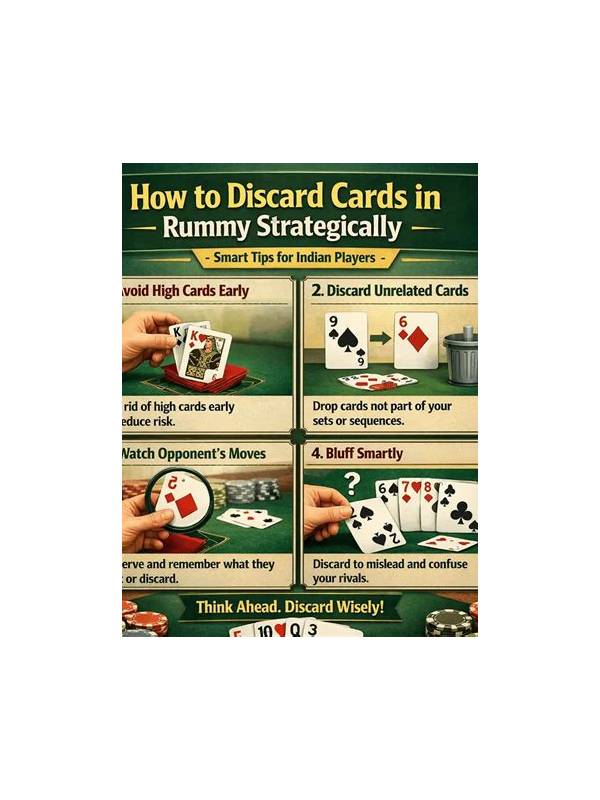
The discard pile provides useful information because it shows what someone chose not to keep. It is still incomplete evidence. Treating it as a promise about the remaining deck can lead to overconfident decisions.
Begin with the obvious observation: which ranks and suits are visible? This can help you notice that a particular route has become less attractive or that several alternatives remain possible. The pile also shows recent behavior. A player taking a card may signal that nearby cards are relevant to that player, but the signal is not certain and may be misleading.
Avoid counting a discarded card as permanently unavailable. In games with more than one deck or repeated ranks, another copy may exist. Even with one deck, you may not know all cards in hidden hands. Use phrases such as “less likely” or “less open,” rather than “impossible.” This keeps your plan flexible.
The order of discards matters too. A recent discard may be strategically sensitive because another player has just rejected it. An older discard is still evidence, but its context may be harder to interpret. Do not give every visible card the same weight. Combine the pile with your own hand and the pace of the round.
When deciding whether to take a discard, ask what the card does immediately and what information you reveal by taking it. A card that completes a group has a clear benefit. A card that merely looks interesting needs a stronger reason, especially if collecting it advertises a narrow plan or leaves expensive leftovers.
In practice, make one prediction based on the pile and record whether the next few turns support it. The aim is not to guess opponents perfectly. It is to learn how often your evidence is strong enough to influence a decision. If a prediction repeatedly fails, reduce the weight you give to that signal.
The discard pile is best used as a map of past choices, not a map of guaranteed future cards. It can narrow attention, expose risk, and improve timing. It cannot remove uncertainty. Keeping that distinction clear prevents a visible pattern from turning into a rigid plan.
A useful review question is, “What did I know, and what did I merely infer?” Visible cards belong to the first category. A guess about a hidden hand belongs to the second. Keep those categories separate when the decision feels important. This habit helps you update a plan when new evidence arrives and reduces the temptation to explain every opponent action as confirmation of your original theory.
Related Post
Rummy Route Density: Compare Plans by Useful Cards
Route density measures how many cards support a plan and helps distinguish structure from wishful [...]
Rummy Guide: Create a Clear Sorting Layout
A simple sorting layout can make useful combinations easier to see while keeping decisions flexible. [...]